Two-Hour Delivery Is Making You Broke — And Here's the Psychology Behind It
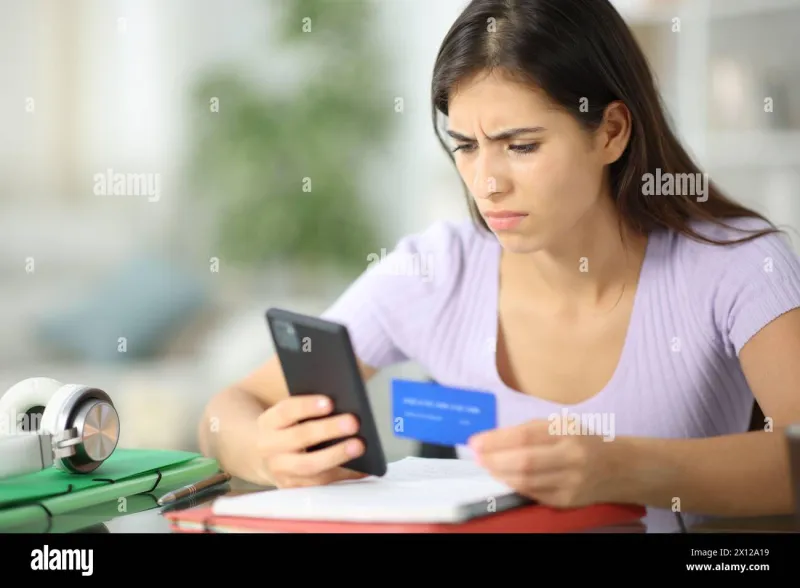
Photo: person looking stressed at smartphone with online shopping app and credit card on desk, via c8.alamy.com
Remember when online shopping felt like a deliberate act? You'd browse a website, maybe sleep on it, come back the next day, and then — if you still wanted the thing — place an order that would arrive in five to seven business days. That waiting period was annoying, sure. But it was also doing you a favor.
That friction is gone now. Same-day delivery, two-hour windows, and one-click checkout have compressed the gap between "I kind of want this" and "it's already on my porch" down to almost nothing. And that compression? It's costing you more than you probably realize.
The Friction Was Actually Protecting You
Behavioral economists have a concept called the "cooling-off period" — the idea that introducing a delay between desire and action gives the rational part of your brain time to catch up with the impulsive part. When you had to wait a week for a package to arrive, that cooling-off period happened automatically. By the time your order showed up, you'd already had time to decide whether you actually wanted it.
Frictionless commerce — one-click ordering, saved payment info, same-day shipping — was engineered specifically to eliminate that delay. Not because it's better for you, but because it's better for conversion rates. Every extra step in a checkout process is a chance for a customer to reconsider, and retail technology has spent the last fifteen years aggressively removing those steps.
The result is a shopping environment that's optimized for impulse, not intention.
Your Brain on Instant Gratification
Here's what's actually happening when you tap "buy now" on your phone at 11 p.m.: your brain's reward system gets activated before the purchase is even complete. The anticipation of receiving something triggers a dopamine release, and because the delivery is happening so fast, that reward loop gets reinforced constantly.
Over time, this can shift your relationship with shopping from something you do when you need something into something you do when you're bored, stressed, anxious, or just looking for a small hit of good feeling. That's not a personal failure. That's a predictable neurological response to a system that was built to produce exactly that outcome.
Psychologists who study compulsive spending have noted a meaningful uptick in what they call "convenience-driven overconsumption" — purchases that aren't driven by need or even strong desire, but by the sheer ease of completing a transaction. When buying something is as frictionless as scrolling through social media, it starts to function the same way: automatic, habitual, and hard to stop.
The Hidden Costs That Don't Show Up Until Later
The financial damage from impulse-driven shopping tends to be diffuse. It's rarely one catastrophic purchase. It's a steady accumulation of $20 here, $35 there, a same-day grocery order that somehow totaled $80 when you only needed milk and eggs. These charges feel small in the moment because they're small in the moment. It's only when you look at a month's worth of transactions that the pattern becomes visible.
There's also the "delivery fee blindness" problem. Many consumers dramatically underestimate how much they spend on shipping, express fees, and membership costs that unlock faster delivery. These costs get mentally categorized as "basically free" because they feel like infrastructure rather than purchases — but they're very much purchases.
Building Friction Back Into Your Shopping Life
The good news is that you don't have to swear off online shopping or start driving to the mall to fix this. You just need to reintroduce some deliberate friction into your buying process. Here's how:
Use a wish list as a waiting room. Instead of going straight to checkout when you find something you want, add it to a wish list or a cart and leave it there for 48 hours. If you still want it two days later, it's probably a genuine purchase. If you've forgotten about it, you just saved yourself some money.
Delete saved payment information. This sounds extreme, but having to manually enter your card number adds about 90 seconds to any purchase — and those 90 seconds are often enough to make you reconsider. It's a small inconvenience that pays for itself quickly.
Set a same-day delivery budget. If you use a delivery service regularly, give yourself a monthly cap specifically for express or same-day orders. When it's gone, it's gone. This forces you to prioritize which purchases actually justify the urgency.
Schedule your shopping. Rather than ordering things as the need (or impulse) arises, pick one or two days a week to place all your orders. Batching purchases gives you perspective on the full picture of what you're spending and often reveals redundancies you wouldn't notice otherwise.
Ask the 24-hour question. Before completing any unplanned purchase, ask yourself: "Do I need this in the next 24 hours?" If the honest answer is no, choose standard shipping. The forced wait reinstates the cooling-off period that instant delivery took away.
Intentional Shopping Isn't About Deprivation
None of this is an argument against online shopping or the genuine convenience it offers. Getting what you need delivered to your door is one of the real quality-of-life improvements of modern retail. The problem isn't convenience itself — it's convenience without intention.
Shopping intentionally means deciding in advance what you need and then using the available tools to get it efficiently. It means treating your cart as a decision, not a reflex. And it means recognizing that the platforms you shop on are very good at nudging you toward spending more, faster — and that a little awareness goes a long way toward pushing back.
At HNB Shop, we want your shopping experience to feel good not just in the moment of clicking "add to cart," but when you check your bank statement at the end of the month too. That kind of satisfaction is worth slowing down for.