Why Your Grocery List Is Getting Smarter (And Your Fridge Is Finally Keeping Up)
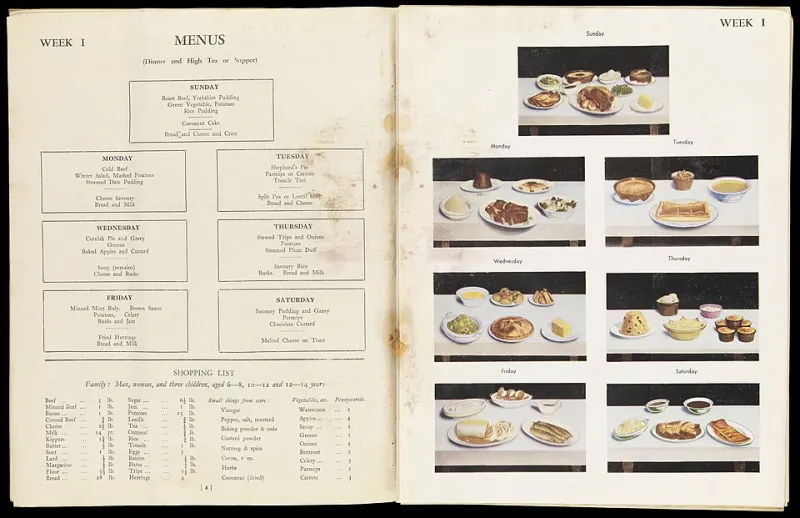
Photo: Unknown, CC BY 4.0, via Wikimedia Commons
For most of American history, meal planning started at the grocery store. You walked in with a vague idea, got distracted by what was on sale, grabbed a few things that looked good, and figured out dinner somewhere between the parking lot and the kitchen. It worked well enough. But it also produced a lot of forgotten leftovers, expired produce, and the quiet shame of throwing out a full bag of spinach that never stood a chance.
Online grocery shopping is changing that dynamic in ways that go well beyond convenience. When you're building a cart on a screen instead of wandering aisles, something shifts in how you think about food. You become more intentional. More organized. And, as it turns out, more economical.
The Shift Happening in American Kitchens
Grocery delivery and click-and-collect services have seen explosive growth over the past several years, and the pandemic accelerated adoption across every age group and income bracket. What started as a niche convenience for busy urban professionals has become a mainstream option for families in suburbs, smaller cities, and even rural communities where delivery infrastructure has expanded significantly.
But the more interesting story isn't the logistics. It's the behavioral change. When you shop online for groceries, you're forced to think ahead. You can't just grab something because it caught your eye — you have to type it, search for it, and add it deliberately. That friction, small as it is, turns out to be enormously useful for building better food habits.
Meal Planning Around What's Actually Available
One underrated benefit of online grocery shopping is the ability to build your meal plan around what's currently in stock, on sale, or in season — before you commit to a recipe.
Traditional meal planning often works in reverse: you pick a recipe, write down the ingredients, and then go find them. If the store is out of something, you're improvising. Online, you can browse what's available and let that guide your weekly menu. Chicken thighs on sale this week? Build a few meals around those. A particular variety of squash showing up in the produce section? That's a seasonal signal worth following.
This approach also makes it easier to take advantage of store brands and bulk options, which can dramatically reduce your weekly food spend without sacrificing quality. When you're not navigating a physical store, it's easier to make those comparisons calmly and deliberately.
Cutting Food Waste Through Intentional Shopping
The USDA estimates that American households waste between 30 and 40 percent of the food supply — a staggering figure with real financial and environmental consequences. A significant portion of that waste happens at the household level, driven by over-purchasing, poor planning, and produce that gets lost in the back of the fridge.
Online grocery shopping addresses this problem in a few meaningful ways. First, it forces you to think about quantities. When you're adding items to a digital cart, you're more likely to ask yourself, "Do we actually need two pounds of strawberries?" than when you're standing in front of a beautiful display at the store.
Second, many grocery delivery platforms let you set up recurring orders for staples — things like milk, eggs, bread, and pantry basics — so you're restocking on a predictable schedule rather than guessing what you're running low on. This reduces both over-buying and the dreaded "we're out of everything" emergency run.
Third, your order history becomes a surprisingly useful planning tool. You can look back at what you bought three weeks ago, remember what went unused, and adjust accordingly. That kind of feedback loop is impossible to replicate with a physical shopping trip.
What This Means for Family Budgets
Food is one of the most controllable line items in a household budget, and online grocery shopping gives families more levers to pull. Beyond the obvious benefit of avoiding impulse purchases (no candy at the checkout lane, no "oh, that looks good" detours through the snack aisle), there are structural advantages worth understanding.
Digital coupons and loyalty discounts are often easier to stack and apply online than in-store. Many platforms automatically apply available deals to your cart, which means you're capturing savings you might have missed otherwise. Price comparison between brands is also faster and more systematic — you can sort by unit price and make an apples-to-apples comparison in seconds.
For families with dietary restrictions, allergies, or specific nutritional goals, the filter and search functions available on most grocery platforms are genuinely transformative. Instead of reading every label in the cereal aisle, you can filter by "gluten-free" or "low sodium" and see only what works for your household. That's not just convenient — it's a real quality-of-life improvement.
Seasonal Eating in the Age of Delivery
There's a common assumption that online grocery shopping disconnects you from seasonality — that you lose the sensory experience of walking through a produce section and noticing what looks fresh and vibrant. And to some extent, that's fair.
But the opposite can also be true. Many grocery delivery platforms now highlight seasonal produce prominently, include "what's fresh this week" sections, and partner with local farms or regional distributors to bring seasonal variety to their digital shelves. If you're paying attention, shopping online can actually make you more aware of what's in season, not less.
Seasonal eating matters for a few reasons beyond the culinary: produce that's in season is generally cheaper, fresher, and more nutritious than out-of-season items that have been shipped long distances. Building your meal plan around seasonal availability — whether you're shopping in person or online — is one of the most effective ways to eat better and spend less simultaneously.
Getting Started With a Smarter System
If you're ready to bring more intention to your grocery shopping, you don't need a complicated system. Start simple:
Do a weekly pantry check before you open your grocery app. Know what you have before you buy more of it. This alone can cut your food spending noticeably.
Plan four to five dinners, not seven. Leave room for leftovers, takeout, or whatever the week throws at you. Rigid meal plans fail; flexible ones succeed.
Build a master grocery list of your household staples and keep it saved in your preferred app. Reordering becomes much faster, and you're less likely to forget something important.
Shop once, eat all week. Consolidating your grocery orders reduces delivery fees and encourages more thorough planning upfront.
The dinner table hasn't changed. But the path that gets food there is smarter than it's ever been.