From Warehouse to Wreckage: The Real Odds Your Package Survives Delivery
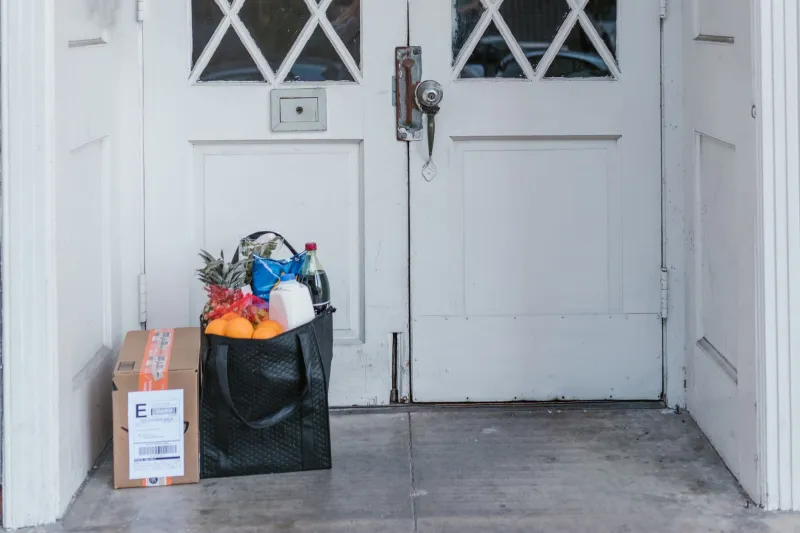
You've been there. You track the package obsessively, watch the little dot inch closer to your neighborhood on the delivery map, and then finally — it arrives. You open the door, pick it up, and something shifts inside the box in a way that immediately tells you this isn't going to be good.
Maybe it's a cracked corner on a picture frame. Maybe it's a shattered coffee mug that arrived as a pile of ceramic dust. Or maybe it's electronics that look fine on the outside but won't power on. Whatever it is, you're now stuck in the middle of a problem that started long before that package hit your porch — and the question of who actually eats the cost is messier than most retailers want you to know.
The Gauntlet Your Package Actually Runs
Here's what most people don't think about: a typical package doesn't just travel from Point A to Point B. It moves through a chain of sorting facilities, conveyor belts, trucks, regional hubs, and finally a delivery driver's vehicle — all before it lands at your door. Industry estimates suggest that packages can be handled anywhere from a dozen to over twenty times during that journey.
Each handoff is a new opportunity for something to go wrong. Boxes get stacked under heavier boxes. They slide across metal conveyor rollers at speed. They sit in unheated or un-cooled trucks during temperature extremes. And during peak seasons — think November through January — volume spikes so dramatically that the careful handling that might happen during slower months basically evaporates.
Carriers like UPS, FedEx, and USPS have their own internal damage thresholds and protocols, but those aren't exactly published for consumer review. What we do know is that damage claims run into the millions annually, and the resolution process is rarely straightforward.
Why Some Retailers Pack Like They're Shipping Fine China — And Others Don't
Open an order from certain retailers and you'll find your item triple-wrapped, suspended in foam, cushioned by air pillows, and sealed inside a box with two inches of breathing room on every side. It can feel almost comically excessive. But there's a reason for it.
Some sellers — particularly those who've been burned by high damage claim rates — have learned that overpacking is cheaper than processing returns, reshipping replacements, and absorbing the customer service cost of a frustrated buyer. The extra packaging material costs a few cents to a dollar or two. A return and reship can cost $15 to $50 or more when you factor in labor, reverse logistics, and lost inventory.
But here's the catch: that packaging cost gets baked into your product price. You're not paying for it as a line item, but you're paying for it. The retailer who sends your item in a box stuffed with enough bubble wrap to insulate a small apartment has already calculated that protection into their margin.
On the flip side, some retailers — especially lower-margin operations or marketplace sellers — go the other direction. They pack light to cut costs. A single layer of poly mailer around something fragile. A box that's technically the right size but has zero cushioning inside. These sellers are essentially gambling that most packages will make it, and statistically, many do. But when they don't, the consumer is often left holding the problem.
The Refund Gap: What You Get Back vs. What You Actually Lost
Here's where things get genuinely frustrating. When a package arrives damaged, most people assume they'll just get a refund or a replacement — and often, they do. But the process isn't as clean as it looks.
Marketplace platforms like Amazon have fairly consumer-friendly return policies for items sold directly, but third-party sellers operate under different rules. Some require photo documentation of damage within 24 to 48 hours of delivery. Others have restocking fees that apply even for damaged goods. A few will dispute that the damage happened during shipping at all, suggesting it's a "use" issue rather than a transit issue.
Even with major retailers, certain categories — like furniture, large appliances, or custom-made items — come with more complicated return windows and processes. You might get a full refund, a partial credit, or a replacement that takes two to three weeks. Meanwhile, you're sitting with a broken item, possibly without a functional replacement, and you've already paid.
Carrier insurance is another layer most consumers don't fully understand. Shipping insurance is often purchased by the seller, not you. If the seller didn't opt into it, or if the declared value doesn't match the actual product value, the payout — if there is one — might not cover the full cost of what was inside that box.
The Packaging Tax You're Already Paying
There's a broader cost hiding in all of this that rarely gets discussed: the environmental and financial burden of packaging waste, and how it ultimately circles back to you as a consumer.
The U.S. generates an enormous amount of packaging waste from e-commerce — cardboard, plastic film, foam peanuts, air pillows. Some of that is necessary. A lot of it is defensive overpacking by retailers trying to avoid the damage claims we just talked about. Either way, the material costs, disposal costs, and sustainability compliance costs all get worked into the price of goods.
At the same time, the retailers who underpack are quietly externalizing costs onto their customers in a different way — through higher return rates, the time you spend filing claims, and the frustration of waiting for replacements. It's a lose-lose for the consumer either way, just dressed up differently depending on which seller you're buying from.
What You Can Actually Do About It
You're not entirely powerless here, even if the system isn't exactly set up in your favor.
Check seller reviews specifically for packaging complaints. On most platforms, you can search review text for words like "damaged," "broken," or "arrived smashed." If a seller has a pattern, it shows up there before you buy.
Document everything immediately. The moment a damaged package arrives, photograph the box exterior before you open it, then the interior, then the item. This protects you in any dispute and speeds up the claim process significantly.
Know your platform's guarantee. Major retailers and platforms have buyer protection policies — learn what yours covers before you need it. Some have very tight windows for reporting damage.
Factor in fragility when choosing shipping speed. Counterintuitively, expedited shipping sometimes means fewer handling touchpoints and less time sitting in a facility. For genuinely fragile items, it can be worth the upgrade.
Consider where you're buying from. A direct-to-consumer retailer with a strong reputation for packaging quality is often a safer bet than a marketplace seller with five reviews and a price that seems too good to be true.
The last mile of delivery is where a lot can go right — and a lot can go sideways. Understanding the economics behind it won't prevent every broken item from showing up at your door, but it'll help you shop smarter, protect yourself better, and stop being surprised when the system doesn't automatically have your back.