Someone's Paying for That Free Shipping Banner — Spoiler: It's You
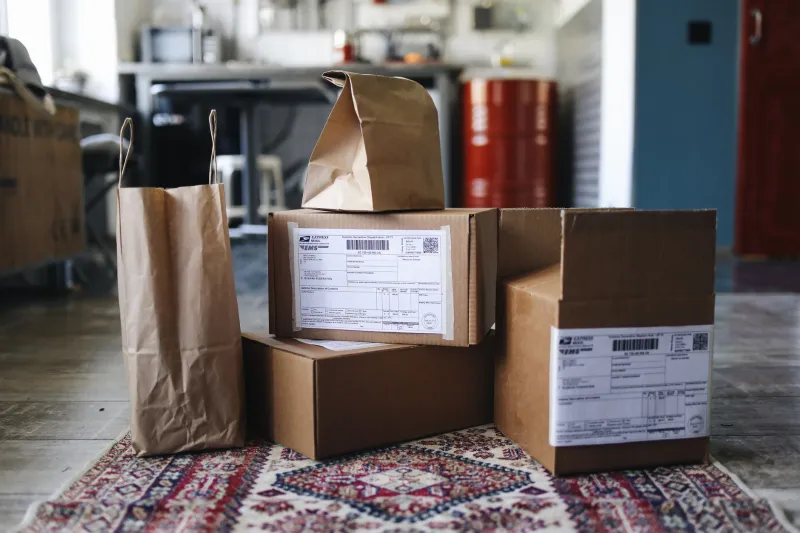
There's something deeply satisfying about seeing "FREE SHIPPING" pop up when you're browsing online. It feels like the store is doing you a favor, like they're eating the cost just to keep you happy. But here's the thing: no retailer in America is absorbing $8 to $15 in shipping expenses out of the goodness of their heart. That money is coming from somewhere — and if you've been shopping online for more than five minutes, you've already figured out where.
It's coming from you.
This isn't a conspiracy theory. It's just basic math dressed up in feel-good marketing. Understanding how it works won't make you paranoid — it'll make you a sharper shopper.
The Real Economics Behind "Free"
Shipping a package in the US isn't cheap. Between carrier fees, packaging materials, labor, and the occasional lost or damaged item that has to be reshipped, retailers spend real money getting products to your front door. According to industry estimates, the average cost of shipping a standard e-commerce order in the US hovers somewhere between $8 and $15, depending on weight, distance, and carrier.
So when a store advertises free shipping, they've got a few options: they can absorb the loss (rare, and usually temporary), they can build it into membership fees (hello, Prime), or — and this is the big one — they can quietly raise product prices to cover the gap.
Guess which option most retailers go with?
Studies on e-commerce pricing behavior have consistently found that products sold with free shipping tend to be priced higher than the same or comparable items sold with a separate shipping fee. The markup doesn't always match the shipping cost dollar for dollar, but it doesn't have to. Even a modest 10-15% price inflation across a catalog can more than offset shipping expenses, especially when customers are buying multiple items per order.
Why Your Brain Loves the Word "Free"
Here's where it gets a little uncomfortable: retailers know exactly how your brain responds to the word "free," and they've engineered their checkout flows around it.
Behavioral economists have studied this for decades. The word "free" triggers a disproportionately positive emotional response — way more than a small discount or a good deal would. When you see a $49 item with free shipping versus a $42 item with $7 shipping, most people instinctively feel like the first option is the better deal. Mathematically, they're identical. Emotionally, they're not even close.
Retailers are also using free shipping thresholds — that classic "Spend $35 for free shipping" prompt — to nudge you into buying more than you planned. You came for one $22 item, and suddenly you're adding a $15 impulse buy just to avoid a $5 shipping fee. The store just sold you something extra. You just spent more money. But it feels like you won.
The Membership Trap
Paid shipping programs are their own flavor of this same trick. Services that charge an annual fee in exchange for unlimited free shipping are genuinely useful for frequent shoppers — but only if you're actually shopping frequently enough to justify the cost.
Run the numbers honestly. If you pay $139 a year for a membership and you're placing four orders a month, you're probably coming out ahead. But if you're placing four orders a year? You'd have been better off just paying individual shipping fees.
The genius of these programs is that they create a psychological pressure to shop more. Once you've paid the annual fee, every purchase feels like you're "getting your money's worth" — even purchases you wouldn't have made otherwise. That membership isn't just a shipping deal. It's a loyalty lock-in.
How to Actually Spot a Real Deal
Okay, so free shipping is baked into prices and sometimes pushes you to overspend. Does that mean you should ignore it entirely? Not at all. It just means you need to do a little extra legwork before clicking "Place Order."
Compare the all-in price, not the line items. When you're shopping for something specific, add shipping to the listed price on every site you check. A $30 product with $6 shipping is cheaper than a $38 product with free shipping. Stop letting the checkout summary do the math for you.
Use price history tools. Browser extensions that track price history on major retail platforms are free and take about 30 seconds to install. If a product's price jumped right around the time the site started offering free shipping, that's not a coincidence.
Check third-party sellers and comparison sites. The same product listed on a big marketplace might be available from a smaller seller at a lower base price — even after you factor in shipping. Don't assume the top result is the best deal.
Be honest about threshold spending. Before you toss something extra in your cart to hit a free shipping minimum, ask yourself whether you actually want that item or you're just avoiding a fee. Sometimes paying the $5 shipping is cheaper than buying $13 worth of stuff you don't need.
Watch for coupon codes that cover shipping. Many retailers offer first-time customer discounts or email sign-up codes that include free shipping on your initial order. If you're not going to be a repeat customer anyway, this can be a legitimate way to get a better deal.
What "Free" Is Really Costing You
None of this means you're being ripped off every time you shop online. Free shipping offers can be genuinely convenient, and sometimes the inflated price is still competitive. The point isn't to be suspicious of every retailer — it's to stop treating "free shipping" as automatic proof that you're getting a good deal.
Convenience has a cost. When retailers absorb that cost into their pricing, they're not being sneaky — they're just doing business. But when they market it as a gift to you, they're counting on you not doing the math.
Do the math. Every single time.
At HNB Shop, we believe getting things delivered to your door should feel genuinely easy — not like you've been cleverly maneuvered into spending more than you meant to. The best shopping experiences are the ones where you feel good about the deal and the delivery, not just one or the other. So next time you see that green banner, take five seconds to check the actual numbers. Your wallet will thank you.